 The Diplomat Nepal
From Lviv to Kyiv: A Journey Across Ukraine in Wartime
I visited Ukraine from 12–20 November 2025 to attend the third edition of Crimea Global, organised by the Mission of the President of Ukraine in the Autonomous Republic of Crimea, the Office of the Crimea Platform, and several Ukrainian NGOs. The theme, “Crimea Global: Understanding Ukraine through the South”, brought together researchers, journalists, and experts from across continents: Mexico, the Democratic Republic of the Congo, Brazil, Kyrgyzstan, India, Malaysia, Argentina, Myanmar, Nigeria, Costa Rica, Nepal, Kenya, and more. I spoke on a panel examining Russia’s recruitment of foreign citizens, including Nepalis, into its war against Ukraine, where around eight Nepalis are currently held as prisoners of war.
Since flights to Ukraine have been suspended since 2022 due to war, my journey began in the in the icy morning light of Warsaw. From there, we drove through the night toward Lviv in a small minivan. Whether it was Ukraine’s warm food or the exhaustion of travel, I slept soundly, even through an air-raid alarm that was meant to send me to the hotel’s basement bunker. I learned of it only at breakfast the next morning, the irony of my peaceful sleep against the backdrop of war making the moment feel strangely surreal.
Lviv: History, Resilience, and Compassion
Lviv greeted us with its layered history and quiet determination. In the early twentieth century, it was the only city in the world to host three Catholic Archbishops, a testament to its tradition of religious coexistence that shaped generations of thinkers and writers. We wandered through its cobblestone streets and met the City Mayor, who spoke about Russian attacks on the city and Lviv’s ongoing efforts to build inclusive urban infrastructure and help veterans reintegrate into daily life.
At the Lychakiv Cemetery, where nearly a thousand fallen defenders rest, and later at the Unbroken Ukraine Rehabilitation Center, we witnessed immense efforts, by local institutions and international partners, to heal the wounded, both military and civilian. Mayor Andriy Sadovy captured Ukraine’s spirit in one striking idea: Ukrainian victory has two inseparable parts, the de-occupation of its territories and the reconstruction of the country. Reconstruction, he stressed, cannot wait for the war’s end; it must continue even amid conflict, to sustain hope and the rhythm of daily life.
After days immersed in Lviv’s history and Europe’s renowned cuisine, we began our journey to Kharkiv, a city just 25 kilometres from the Russian border.
Kharkiv: On the Frontline
As we approached one of Ukraine’s most targeted regions, news alerts lit up our phones: Kyiv was under a massive drone and missile attack by Russia. Reports spoke of 430 drones and 18 missiles launched on 14 November. Messages from friends in India, Nepal, and elsewhere poured in, their concern amplifying our unease. Though the world is witnessing the largest war in Europe since World War II, my family knew little of the risks I was taking. I had deliberately shielded them from the harshest realities.
Yet, once we reached Kharkiv, the anxieties softened. The crisp winter air, the richness of Ukrainian cuisine, the bright laughter of children studying in underground schools, and the warmth of local hospitality made us momentarily forget the war looming above.
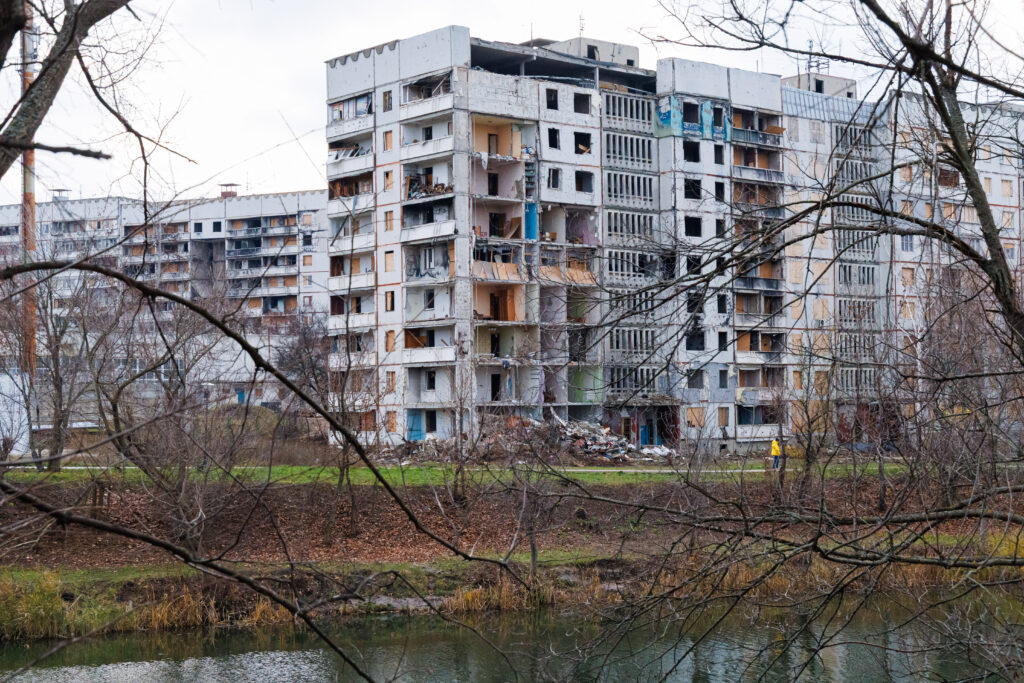
We met the Deputy Head of the Kharkiv Regional Military Administration, who briefed us on how the region had endured nearly four years of full-scale invasion. Despite relentless shelling, Kharkiv continues to rebuild: underground hospitals and schools are expanding, safe education spaces multiplying, and reconstruction proceeding, even when it must take place beneath the earth. Our day was spent partly in devastated neighbourhoods such as Northern Saltivka, and partly in underground shelters for meetings and visits. I still cannot say whether I spent more time above ground or below it, but what I saw was a reality far removed from the world’s distant screens.
Kyiv: The City of Golden Domes
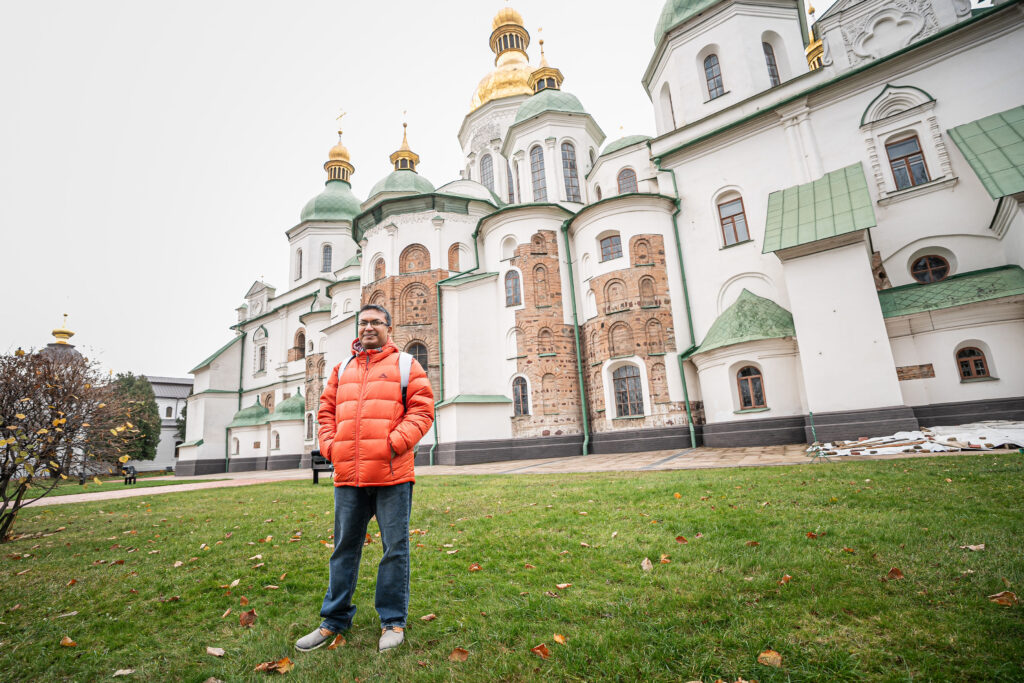
From Kharkiv, the “City of Students, Science, and Industry,” we travelled to Kyiv, the legendary “City of Golden Domes.” We arrived at midnight. By morning, Kyiv welcomed us with sunlight shimmering on its ancient rooftops. We explored the historic centre, Yaroslaviv Val, the Golden Gate, St. Sophia’s Cathedral, and Mykhailivska Square. Later, we visited the Ukrainian Council of Weapons to learn about the country’s rapidly growing defence industry.
In Lviv, I had slept through the air-raid alarm. Kyiv did not grant such fortune. On the first night, the warning siren drove us underground for an hour; on the last night, we remained in a cold bunker until dawn. We were considered lucky, our shelter had beds, water, and electricity. Many Ukrainians sleep through the night without any of these.
We also joined a closed-door roundtable on “Ukraine’s Resilience in War: Challenges, Responses, and International Support.” Conversations with parliamentarians, ambassadors, and officials from the President’s Office revealed the immense scale of suffering, and of steadfast resolve. Thousands of Ukrainian political prisoners are currently held by Russia. Ukraine, they told us, is fighting not only for its own freedom but for the security of Europe itself. In a war of this magnitude, three elements are decisive: international support, a technologically prepared army, and a competitive defence industry.
Nepal’s Support to Ukraine
I was heartened to meet a few Nepali and Indian faces in the gatherings. It was striking to learn that fewer than ten Nepali families currently reside in all of Ukraine. Equally surprising was how little awareness there seemed to be about Nepal’s support during the conflict.
In March 2022, Nepal voted in favour of Ukraine’s call at the UN Human Rights Council for an urgent debate to condemn Russia’s military operation. Of the 29 nations that supported holding the debate, Nepal stood among them, while neighbouring giants chose different paths: China voted against, and India abstained.
Again, on 25 February 2025, Nepal voted in favour of the UN General Assembly resolution titled “Advancing a comprehensive, just, and lasting peace in Ukraine.” Nepal supported the resolution, while its immediate neighbours, India and China, abstained. Interestingly, the United States voted against it, alongside Russia. These moments reflected Nepal’s principled stance, something many Ukrainians were unaware of.
Reflections and Hopes
After two days of intense discussions with Ukrainian and international experts, a country that had once been distant to us had transformed into a place filled with friendships, colours, and stories that will remain with us forever. As the train departed from Kyiv toward Poland, we passed through streets lined with brave, warm-hearted people, waving flags, holding flowers, dancing beside the windows. The scene was overwhelming. Yet we could neither let our tears fall nor look away from the emotion mirrored in their eyes.
When I returned home, I learned that the United States had proposed a 28-Point Peace Process, a comprehensive framework aimed at ending the war. According to a Kyiv International Institute of Sociology (KIIS) survey, 76 percent of Ukrainians categorically reject the plan. Whether this initiative will bring relief or lasting peace remains uncertain. But like millions of others, I hope peace arrives soon, a peace that respects Ukraine’s sovereignty and secures long-term stability for its people.