Defining Relevance: What Biratnagar can Become
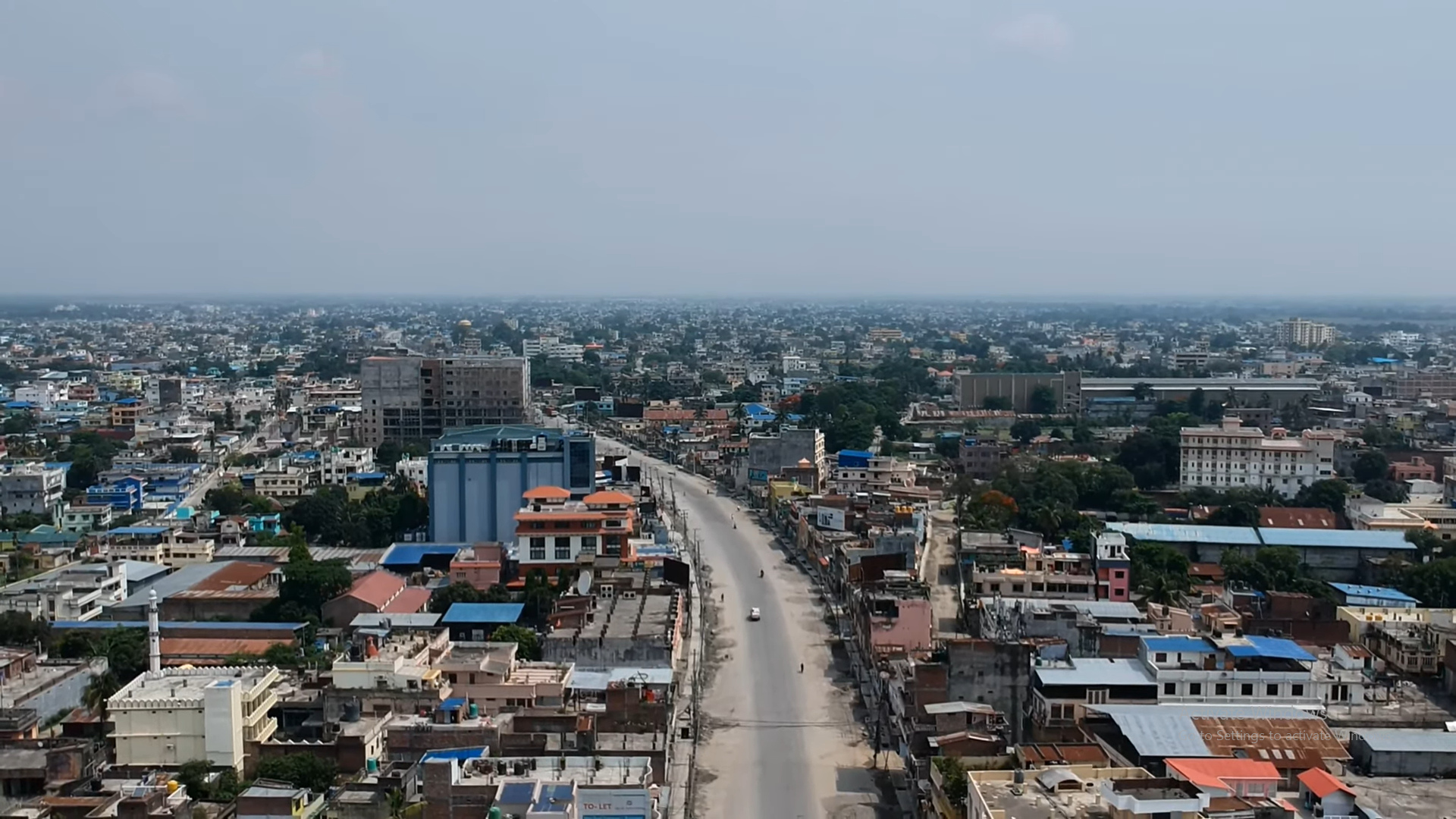
Cities persist when they remain necessary to the economy around them. Cities erode away based on erosion of the function they perform within a national system. Biratnagar’s slow erosion cannot be explained through the language of growth rates, budgets and investment gaps. Because, Biratnagar is not eroding because Nepal failed to grow. The erosion is because Nepal no longer needed it to do anything essential. When a city’s function erodes, decline follows quietly. Biratnagar’s story is not one of collapse or neglect, but of relevance draining away as the national system reorganized.
From the 1970s through the late 1980s, early 1990s – Biratnagar occupied a clear position in Nepal’s economic architecture. It functioned as the country’s primary industrial conversion node. Labor flowed into mills and factories; factories generated wages; wages recycled into local demand; and local capital was reinvested into production capacity. This loop was protected, imperfect, and politically mediated but it compounded. Biratnagar mattered because it performed work that the national economy depended on. It anchored employment, fiscal flows, and regional stability in eastern Nepal at a scale no other city could replicate at the time.
At its peak, Biratnagar was not simply an industrial town; it was a coordinating center within Nepal’s political economy. Industrial employment concentrate labor, organized social power, and anchored fiscal flows outside Kathmandu. Local business elites functioned as builders rather than rent-holders, reinvesting profits into mills, housing and urban services. The state’s development model at the time favored spatial dispersion of production, border-proximate industry, and employment-led growth. Biratnagar fit this model precisely. Its relevance was aligned with how Nepal governed, allocated capital and managed economic risk during that period.
The liberalization of 1990s reorganized Nepal’s political economy and began the reduction of the role of protected industrial enclaves. Policymaking, finance and most importantly- institutional authority consolidated in Kathmandu. Remittances slowly emerged as a dominant macroeconomic force, reshaping labor markets and household balancesheets across the country. Growth became increasingly consumption-led and centrally mediated. These changes altered how value was created and coordinated in Nepal. The national system no longer required dispersed industrial nodes in the same way. Cities that remained aligned with state power, capital aggregation and institutional density gained relevance. Others, including Biratnagar were left structurally misaligned.
From Industries to Remittance
The reorganization of Nepal’s political economy translated into Biratnagar through a gradual loss of compounding capacity. Manufacturing declined as liberalization eroded tariff-protected advantages and exposed undercapitalized mills, but no new production logic replaced it. More importantly, city failed to transition from factories to institutions capable of aggregating scale. Universities, hospitals and trade sectors existed, yet remained fragmented, inward facing and balance sheet constrained. None achieved regional indispensability or exportable service depth. At the same time, remittances flowed steadily into Biratnagar, arriving atomized at the household level. In the absence of credible aggregation mechanisms and scalable enterprises, capital parked rationally in land and housing. Credit followed collateral rather than productivity – exposing the single point failure of risk pricing capabilities. The combined effect was structural: production capacity exited, institutions failed to form gravity, and financial inflows froze into inert assets. Biratnagar remained solvent and populated but it ceased to compound.
None of this implies that liberalization or market integration was a mistake. The shift toward open markets, mobility, and remittance driven growth expanded opportunity across Nepal. The failure lay elsewhere. Biratnagar lost relevance because it did not reposition itself within the markets as they moved. Cities that thrive under liberalization do so by upgrading their role – from protected production to coordination, aggregation and exportable services. Biratnagar’s challenge was that when it got exposed to the competition, there was an absence of institutional mechanism that could convert that openness into scale. What followed was a familiar policy error: an attempt to substitute consumption and lifestyle infrastructure for economic function (this fallacy is seen in journey of multiple Nepali cities). This imitation of Kathmandu’s surface economy ignored the deeper sources of its resilience – state expenditure, institutional concentration, and balance sheet depth – all that makes lifestyle expenditure surface area possible for Kathmandu. The engine itself would not be replicated through building malls or hotels alone, Biratnagar suffered from a development mis-sequencing.

Pravesh Rijal
So what do we do with this diagnostic? I would like to close by framing what it would mean to make Biratnagar necessary again. Biratnagar’s future does not lie in recreating what it once was. It mean respecifying its role within Nepal’s current political economy or even better, if we can align with what Nepali political economy will become. An economy that is open, mobile, remittance-funded, and institutionally centralized (even though decentral governance). In such a system, cities remain relevant by organizing markets. Biratnagar’s opportunity is to act as a platform – exporting health services (already happening at a micro level), trade facilitation and skills in ways that covert geography into scale. The constraint actually is not demand, capital or labor – the single constraint is vision, planning and coordination. The binding challenge is institutional design and collective action. If Biratnagar can organize these flows coherently and sequence the investments appropriately to formulate a markets engine – it will shine, if it cannot, decline will remain orderly, solvent and permanent.
Pravesh Rijal is a New York Based global banking executive with deep expertise in finance and capital markets. Born in Biratnagar, he has worked at the frontier of international finance and policy. He often writes on financial stability, macro financial innovation, capital-market reform, and the role of diaspora capital in Nepal’s economic future.
-By Pravesh Rijal