npl.977 Nepal News Stream

OnlineKhabar English News logo

OnlineKhabar English News

English Edition

Contents

ACORAB Nepal launches nationwide fact-checking campaign for community radio journalists

Prasun Sangroula 21 hours ago
Representational image for fact-checking press freedom media
Representational image for fact-checking. Photo: Pixabay

Kathmandu, March 2

The Association of Community Radio Broadcasters (ACORAB) Nepal has launched a nationwide initiative to strengthen the fact-checking skills of community radio journalists.

The campaign provides mentorship to radio journalists and technicians from 21 community radio stations across seven provinces, equipping them to identify misinformation, disinformation, propaganda, and election-related rumours, and to produce verified, fact-based electoral content that enables the public to make informed voting decisions and actively participate in democratic processes beyond elections.

Journalists from these stations will receive dedicated mentorship on identifying misinformation and disinformation in electoral contexts, along with training in fact-checking tools and techniques, ethical journalism, election reporting, and digital verification methods.

“Community media are close to the people, can communicate in local languages, and understand the local context, making them best positioned to produce localised content and counter rumours so communities are not misinformed,” Siromani Dhungana, Director at ACORAB Nepal, said during the formal announcement of the campaign. “Our priority is to strengthen community radio journalists as local fact-checkers and support meaningful public participation in democratic processes.”

There is a massive flow of information during elections, and people can easily be influenced by content they encounter, whether it comes from verified sources or not. Misinformation spreads quickly across digital and social media platforms.

The pre-election environment is sensitive, and some communities are already facing conflicts. The credibility of the information people receive during such a period can determine whether those tensions escalate or not. Community radios should play a key role in ensuring that reliable information reaches communities and raises awareness about the risks of unverified content.

 “Many community radios lack sufficient human resources and the technical capacity needed to integrate effective fact-checking into their reporting and production processes. This campaign, therefore, focuses first on strengthening journalists’ fact-checking skills, and then enabling them to produce electoral content that contributes to a free, fair, and transparent election on March 5,” said Dhungana.

“Even beyond the election period, the initiative aims to support community radios in continuing to create such content to counter information disorder at the local level and reinforce public trust in democratic processes,” he added.

According to him, radio stations have already started producing and disseminating fact-check-based content in four languages, Maithili, Bhojpuri, Tamang, and Tharu, as well as in local dialects of Karnali Province.

Beyond the elections, ACORAB plans to introduce dedicated programmes that mobilise community radios as local fact-checkers and strengthen their institutional capacity to safeguard information integrity and counter misinformation, disinformation, and hate speech at the community level.

In recent years, ACORAB Nepal has adopted a radio-digital convergence model to ensure its nationwide network of more than 350 community radios can effectively use multimedia tools to deliver essential information.

The post ACORAB Nepal launches nationwide fact-checking campaign for community radio journalists appeared first on OnlineKhabar English News.
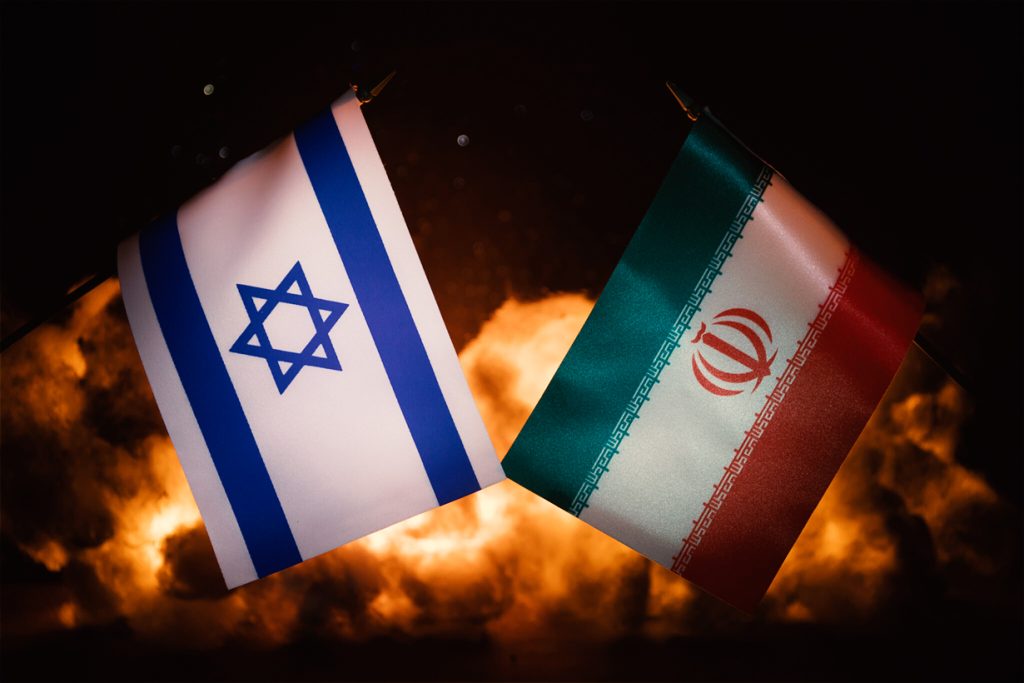

Rising Gulf tensions spark anxiety among Nepali workers

Prasun Sangroula 22 hours ago
Rising Gulf tensions spark anxiety among Nepali workers

Regional tensions have intensified after Israel and the United States launched a joint attack on Iran. In response, Iran has begun targeting US and Israeli military installations in the Gulf region.

As the overall Gulf region becomes unstable, millions of migrant workers, particularly the Nepali community, are left stranded and anxious.

It is estimated that around 2 million Nepali workers are employed across Gulf countries. Nepalis living in the United Arab Emirates (UAE), Qatar, Saudi Arabia, Kuwait, and other countries are now grappling with the question: “What’s next?” The fear that the conflict may escalate has heightened their worries.

According to Nepalis in the UAE and Qatar, security measures have noticeably increased lately. In some locations, workers have been temporarily granted leave from work, while local authorities have instructed people to remain safely indoors.

“We have been told not to go to work, so we are staying at home,” a Nepali worker in the UAE told Onlinekhabar via phone. “So far, the situation is not as chaotic as seen on social media, but we are worried about what the future holds.”

Another Nepali working in Qatar said that regular warning messages and siren alerts are being sent to mobile phones. After the sirens, people are instructed to stay in safe places and not go outside.

Security has also been heightened in the UAE, and residents are being advised to stay indoors, considering potential risks.

As tensions rise, the risk of rumours and misinformation also increases. The UAE government has explicitly warned against spreading unverified information, photos, or videos on social media.

Such activities may be punishable under local law. In particular, there is fear among the public that missiles might stray from their intended targets, which increases anxiety. Therefore, authorities have urged high vigilance and advised people to rely only on official information.

Meanwhile, the Nepali Embassy in the UAE has issued “Advisory–2,” appealing to the Nepali community there to act responsibly and cautiously.

The embassy has requested people not to share unverified or misleading content via social media or other means, and not to broadcast information from unknown sources. Earlier, the embassy had also advised against unnecessary travel and urged strict adherence to security measures.

The advisory notes that local authorities have warned that spreading rumours may result in legal action. Therefore, Nepalis residing there are urged to fully comply with local laws and follow only official updates.

Nepali embassies in the UAE, Qatar, Saudi Arabia, Israel, and Kuwait have issued public notices, asking the community to remain alert and safe.

There is also concern that if the conflict continues, it could affect employment and daily life. 

“A few days off is fine, but if the situation prolongs, how will we manage to survive while stuck in our rooms?” one worker asked.

They note that if work stops, income halts, and necessities like food could become difficult to manage.

Although Nepalis in Gulf countries are currently safe, the uncertainty caused by the regional conflict is increasing psychological stress.

Preparations must be proactive, not reactive: Migration expert

Since a large number of Nepali workers are employed in Gulf countries, there is growing concern in Nepal about their safety, access to information, and potential evacuation preparedness.

Migration expert Jeevan Baniya emphasised the need for the state to undertake immediate, multidimensional preparations. He stressed that the tendency to react only after problems arise must not be repeated.

Nepal must learn from past conflicts and crises and prepare in advance, he says.

“We have experienced similar situations in the past. Now the situation is directly affecting people, but our tendency is still to act only after problems arise,” he says. “If preparatory work is not carried out regularly, managing a crisis becomes difficult.”

First, the state must have updated information on how many Nepalis are in each Gulf country, city, and workplace.

“If we don’t have accurate data and contact numbers, how will information be communicated and coordination handled during a crisis?” he questioned.

Baniya emphasised that accurate information is more important than rumours during emergencies, and that regular updates are essential.

“The situation, risks, what to do and what not to do, all this must be communicated to workers in a phased manner,” he says.

He also noted that many Nepalis in the Gulf, especially young workers, do not understand the Nepali language well, so information should also be provided in languages like Maithili and Bhojpuri.

He added that the Nepali diaspora plays an important role in crisis management. Diaspora leaders can quickly update and reach workers, ensuring faster dissemination of information and assistance.

If the conflict escalates, there is a risk of casualties or deaths. In such cases, rescue and humanitarian assistance become necessary, requiring coordination of flights, diplomatic engagement with destination countries, and management of international air travel.

Nepal does not currently have enough aircraft capacity to evacuate a large number of workers at once. In past situations, assistance from countries like India and Bangladesh has sometimes been used. He emphasised that continuous diplomatic dialogue is essential for such coordination.

Baniya mentioned that some workers stranded in Nepal due to recent international flight disruptions illustrate the need to utilise the Welfare Fund of the Foreign Employment Board.

“The fund can be used to extend tickets, arrange housing, or repatriate workers if necessary,” he says.

He also noted that the “exit visa” system in some Gulf countries could pose obstacles during evacuation, so continuous dialogue with the relevant countries is necessary to facilitate movement.

According to Baniya, this crisis presents an opportunity for Nepal to address structural weaknesses in labour migration management.

“Risk assessment, updated data, multilingual information systems, diaspora coordination, and diplomatic preparedness, if institutionalised, future crises can be managed more smoothly,” he says.

Government preparations

Following rising tensions in the Middle East, the government of Nepal has reportedly begun taking necessary measures. The government has temporarily suspended labour approvals for Nepalis intending to go to Gulf countries.

This decision was made in light of the current situation between Israel, the United States, and Iran.

Labour, Employment, and Social Security Minister Rajendra Singh Bhandari stated that four tasks are currently underway. For the time being, labour approvals for foreign employment have been suspended.

Minister Bhandari said that until further notice, all labour approvals for Nepalis going abroad are on hold.

Additionally, Nepalis waiting at airports to travel to affected countries have been asked to return home. Given the increased security measures in these countries, the government has advised workers to go back home.

The ministry’s call centre has been kept operational 24/7, he adds.

The government has also stated that it is prepared for evacuation if the situation escalates.

“Depending on how events unfold, we are preparing plans for evacuations tomorrow or the day after, if necessary,” Minister Bhandari says.

The post Rising Gulf tensions spark anxiety among Nepali workers appeared first on OnlineKhabar English News.
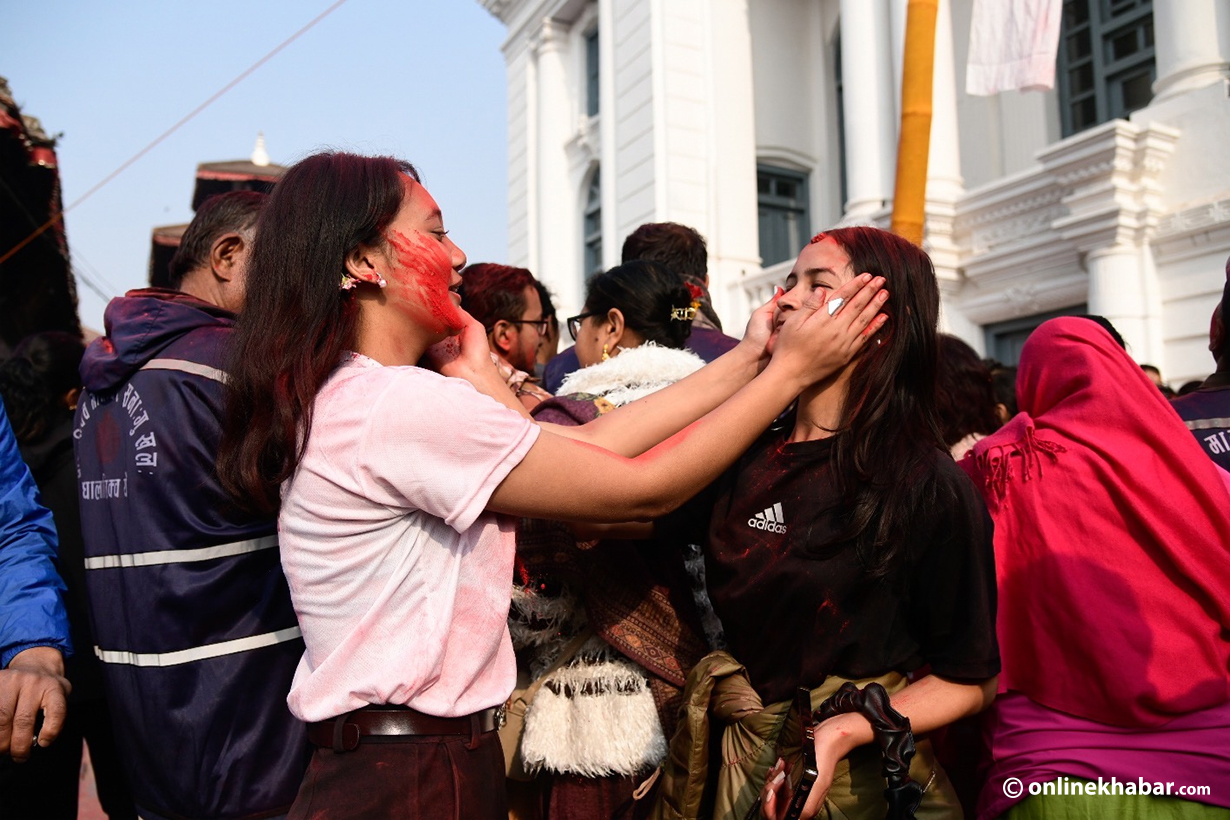
Holi being observed today

Prasun Sangroula 23 hours ago
Holi being observed today

Kathmandu, March 2

The festival of colours, Holi, is being celebrated with joy and enthusiasm today in Kathmandu Valley as well as in hilly districts. On the occasion of Phagu, or Holi, the government has also declared a public holiday in the hilly districts today.

Every year, Holi is joyfully celebrated on the full moon day of Falgun in the hilly and Himalayan districts, and the following day in the Terai and inner Madhesh districts.

Holi is celebrated as a festival marking the victory of truth over falsehood, justice over injustice, and virtue over vice. It is a tradition during Holi to set aside all anger and resentment, and to enjoy the occasion with family and friends by applying colours and gulal, sharing love and warmth.

Holi is also traditionally celebrated as a festival that conveys the message of harmony, friendship, and goodwill.

The festival begins with raising a pole decorated with colourful cloth, called chir, and concludes on the night of the full moon after the chir is burned.

On this occasion, President Ramchandra Paudel, Prime Minister Sushila Karki, and top leaders of political parties have extended their greetings and urged everyone to celebrate Holi in a respectful and dignified manner.

The police administration has warned people not to engage in unruly activities or indiscriminately throw colours and water balloons in the name of Holi, and has cautioned that legal action will be taken against those who violate the rules.

The post Holi being observed today appeared first on OnlineKhabar English News.

Explore news by Source or Category