npl.977 Nepal News Stream

OnlineKhabar English News logo

OnlineKhabar English News

English Edition

Contents

How long will government formation take after the election?
Prasun Sangroula 29 minutes ago
How long will government formation take after the election
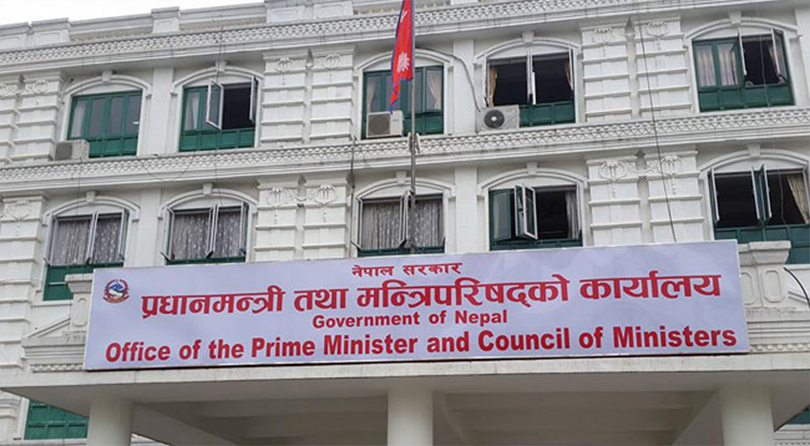
File image: Office of the Prime Minister and Council of Ministers

Kathmandu, March 4

The election for the House of Representatives is scheduled for this Thursday. If voting is not postponed anywhere and the election is conducted peacefully, the Election Commission plans to prepare the results by March 10.

Acting Chief Election Commissioner Ram Prasad Bhandari, in a conversation with Onlinekhabar, said that they are ready to complete the vote counting as quickly as possible.

He stated, “If nothing unexpected happens, we are preparing to finalise both the first-past-the-post and proportional representation results within the second week of March and submit the election report to the President.”

After voting concludes, the Office of the Returning Officer will first count the votes under the first-past-the-post system. Then, it will count the proportional representation votes and send the total vote figures to the Election Commission.

Following the allocation of proportional representation votes, the Election Commission will distribute the proportional seats among the parties, and the parties will submit the list of their elected lawmakers to the Commission.

Section 62 of the House of Representatives Member Election Act, 2017 stipulates that a report including the election results must be submitted within one week of the announcement of the results.

The section states: “The Commission shall submit a report including the results of both the first-past-the-post and proportional electoral systems to the President within seven days of the announcement of the election results.”

Referring to this provision, Acting Chief Election Commissioner Bhandari claimed that the report would be submitted to the President by the end of Falgun.

According to his claim, even if the work is not completed on time, the Commission is likely to submit the report to the President’s Office by the third week of March at the latest.

Once the President receives the election results report from the Election Commission, it is considered that the President has formally been informed of the House of Representatives election results.

Attorney General Sabita Bhandari Baral says that once the Election Commission publishes the election results, the process of forming the next government will automatically begin.

According to her, the federal parliament must be convened within one month of the publication of the results, and the report must reach the President within one week. After that, the much-discussed Article 76 of the Constitution will come into effect in a phased manner.

If a political party secures a clear majority, the President will appoint the leader of that party’s parliamentary party as Prime Minister under Article 76(1). For that, the concerned party must hold a parliamentary party meeting to elect its leader. Article 76(1) of the Constitution states: “The President shall appoint as Prime Minister the leader of the parliamentary party that commands a majority in the House of Representatives, and the Council of Ministers shall be formed under his or her chairpersonship.”

However, if no party secures a clear majority, a member of the House of Representatives who can garner the support of two or more parties must be appointed Prime Minister. For that, the President must call for the formation of the government under Article 76(2), and parties will submit their claims at the President’s Office.

Within one month of the final announcement of the election results by the Election Commission, the President must convene a session of the Federal Parliament in accordance with Article 93(1) of the Constitution.

Attorney General Baral says that preparations are underway to make the Federal Parliament building ready for a session in the first week of Chaitra, and the next government could be formed around that time.

She said, “Depending on the election results, selecting the Prime Minister and forming the government may take some time. But it is unlikely to take more than a week or ten days.”

If the final results are announced in the third week of March, the government formation process will depend on the strength secured by the parties in the election. If any party obtains a clear majority, it will be easier for the President to appoint a Prime Minister. However, if two or more parties need to form a coalition government, the President will call for the formation of government, which may take additional time.

The post How long will government formation take after the election? appeared first on OnlineKhabar English News.

2 vehicles torched in Kathmandu; pamphlets linked to Durga Prasai recovered

Sangita Shrestha 22 hours ago

Kathmandu, March 3

Two vehicles were set on fire in Kathmandu after the start of the silence period for the House of Representatives election. The incidents occurred this morning in Sukedhara and Naikap.

Spokesperson for the Kathmandu Police Range, SP Pawan Bhattarai, confirmed the arson attacks. According to him, vehicles with registration numbers Ba 7 Cha 1401 in Sukedhara and BAA 2836 in Naikap were torched.

SP Bhattarai told Onlinekhabar that the vehicles were set ablaze at around 3 am on Tuesday morning, and pamphlets related to Durga Prasai were found inside the burned vehicles.

“The arson took place at around 3 am. Pamphlets linked to Durga Prasai were found inside,” he said. “The vehicle owners have not yet filed a complaint. We are investigating the matter.”

Durga Prasai, coordinator of the Nation, Nationality, Religion, Culture and Citizen Protection Campaign, was arrested from his residence in Bhaktapur on Falgun 17 by Bhaktapur Police. The administration has granted permission to keep him in custody for five days.

The post 2 vehicles torched in Kathmandu; pamphlets linked to Durga Prasai recovered appeared first on OnlineKhabar English News.
Exodus from Kathmandu Valley grows as voters return home ahead of house polls

Sangita Shrestha 22 hours ago

Kathmandu, March 3

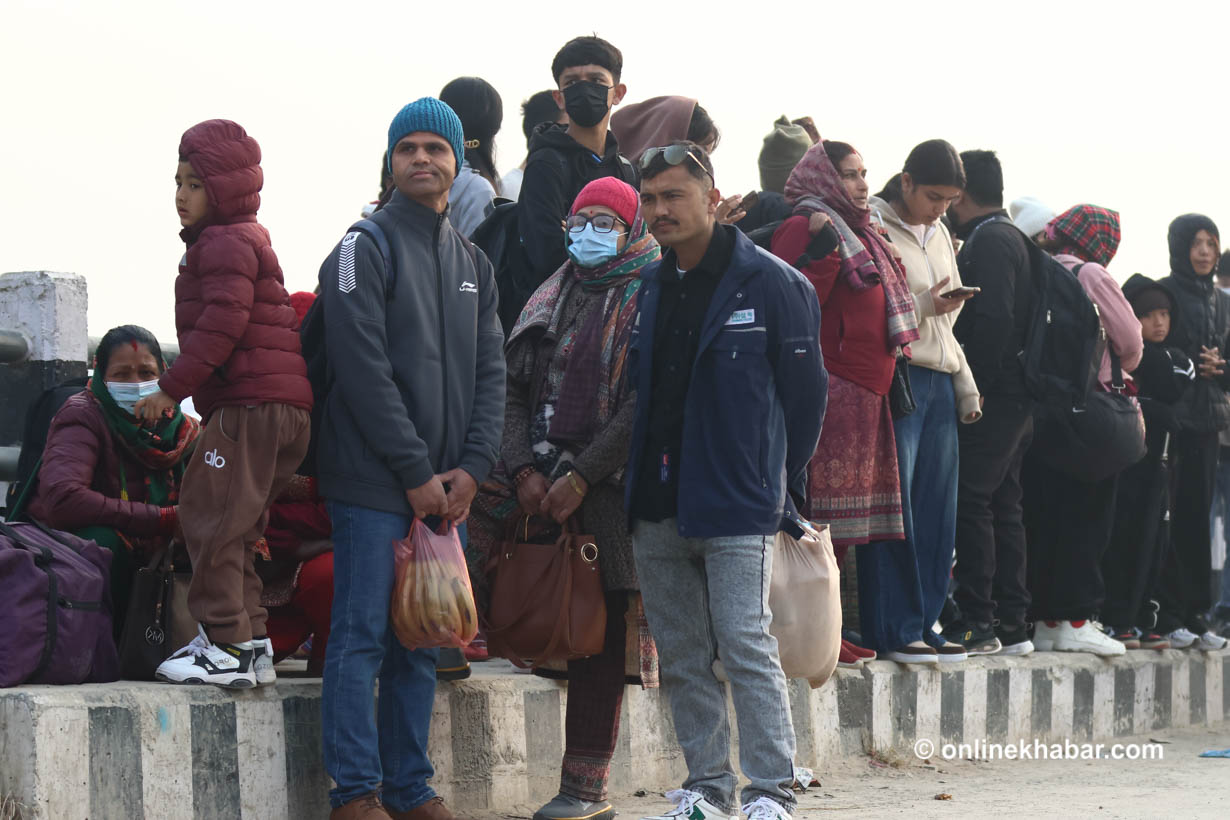
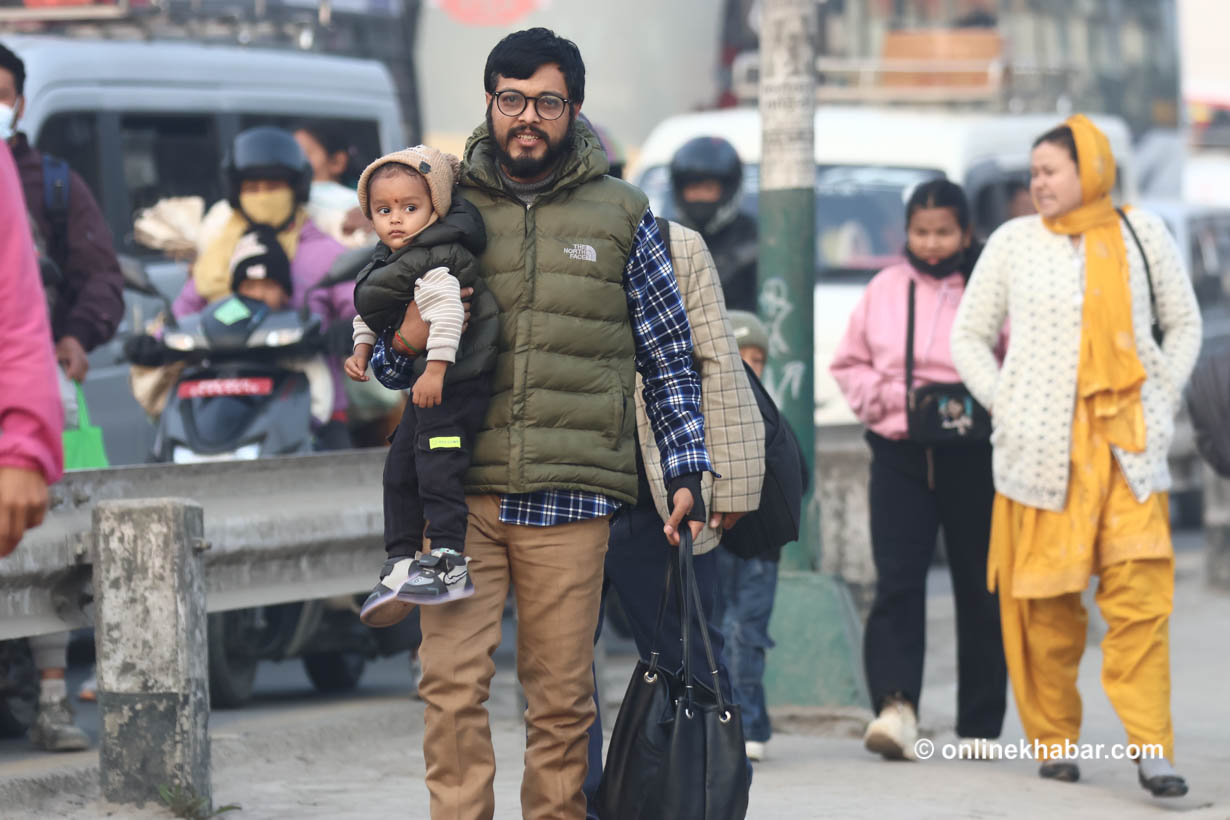
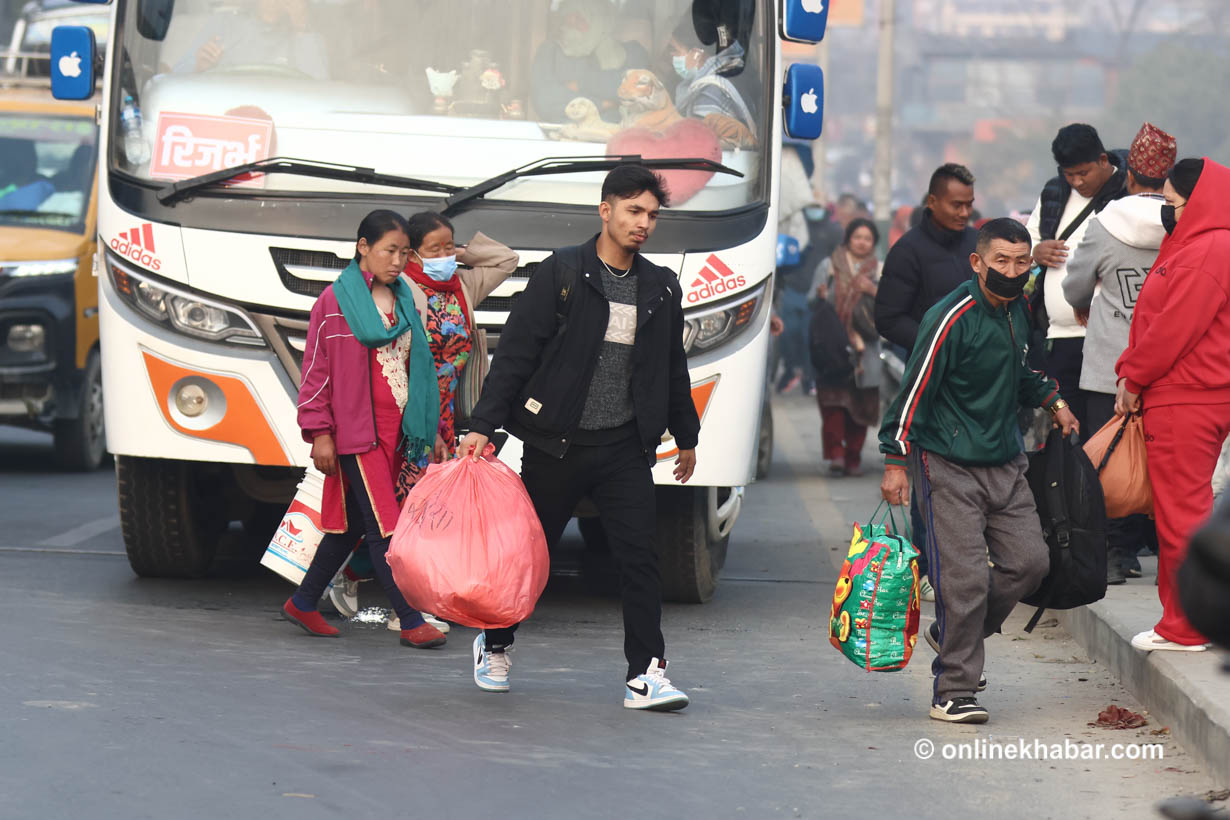
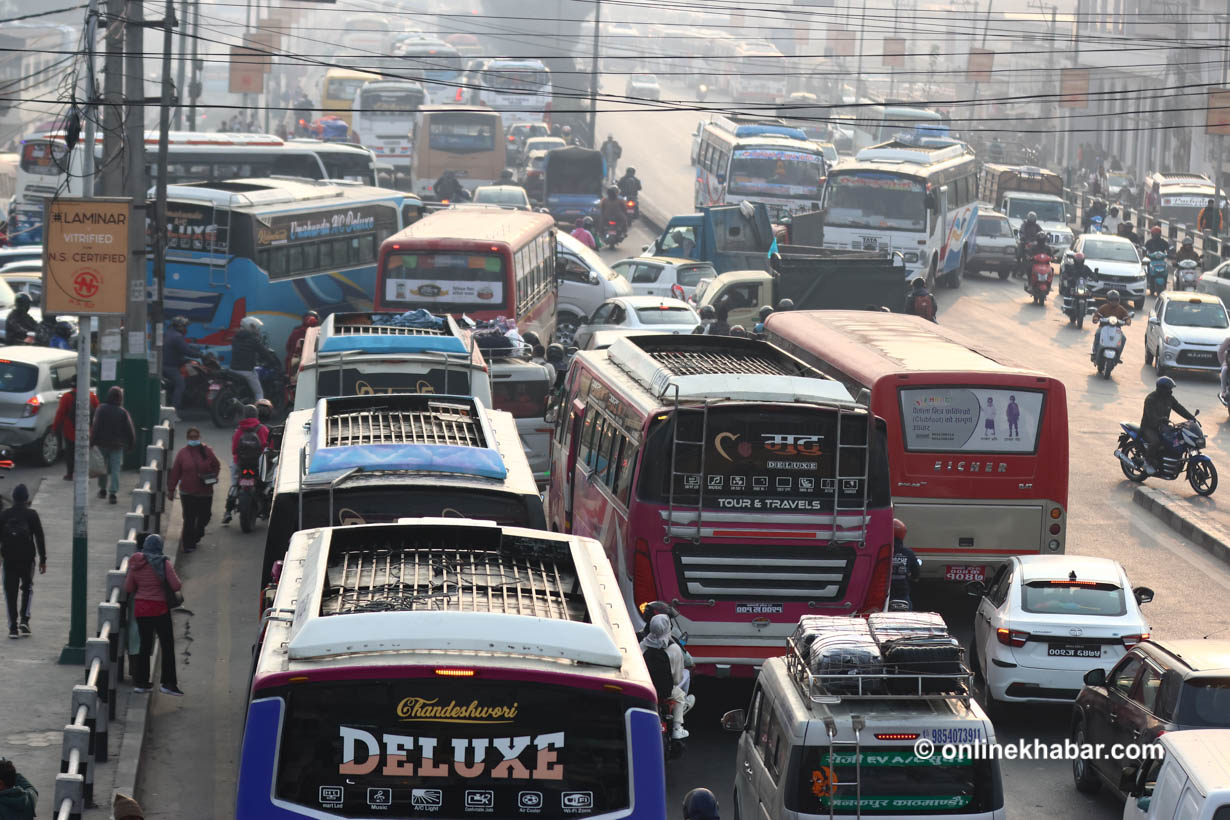
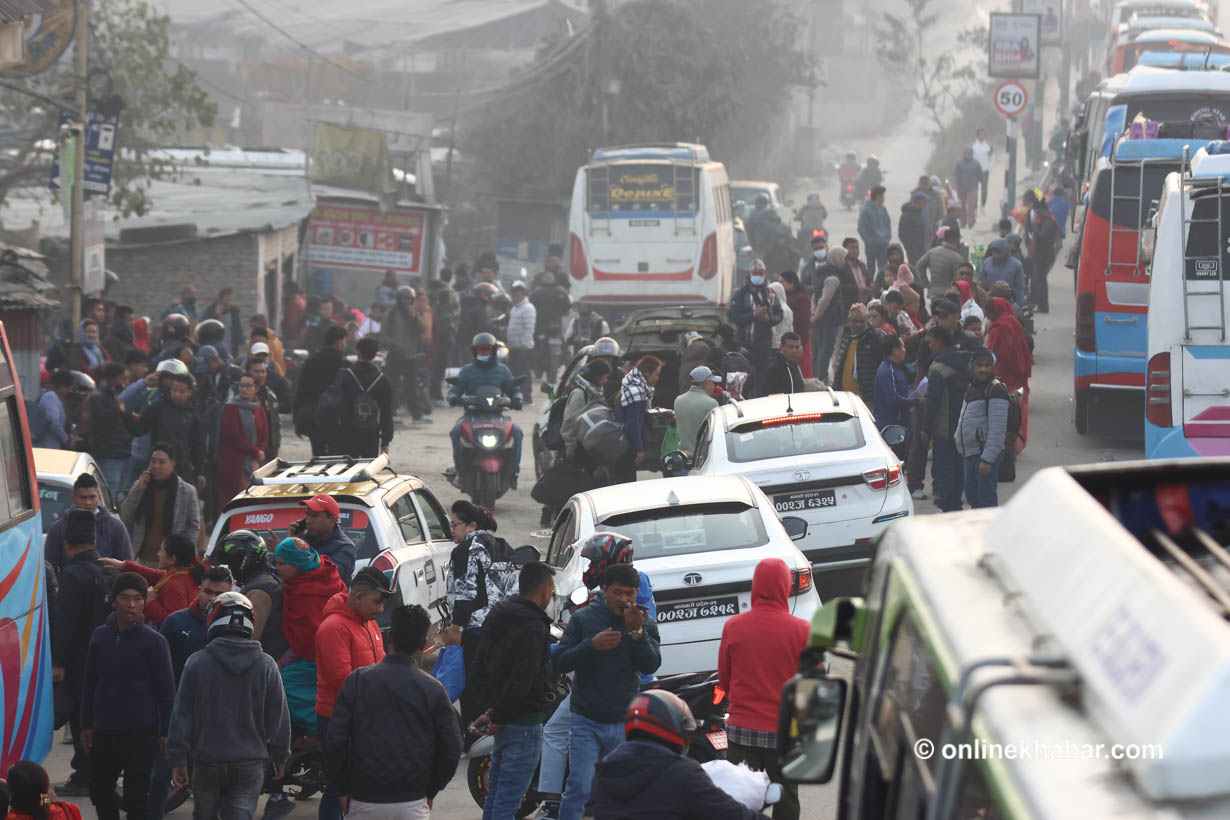
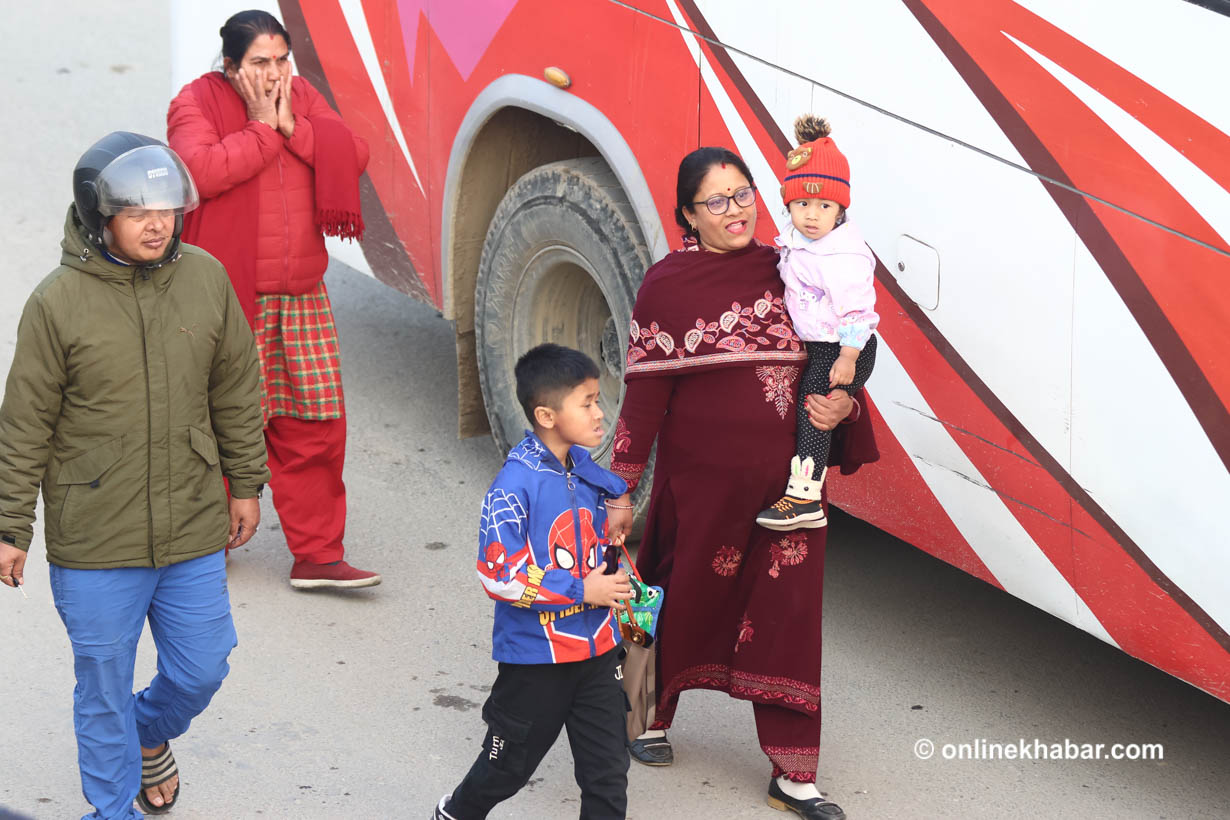
As the day of the House of Representatives election draws near, the number of people returning to their villages from the Kathmandu Valley has increased. Crowds leaving the Valley can be seen at its major exit points.

A significant number of people have been departing from Koteshwor, Lokanthali, Kalanki, Balkhu, and Balaju Machhapokhari. They are heading toward their destinations with family members and friends, carrying heavy bags.

According to the Kathmandu Valley Traffic Police Office, around 800,000 people have left the Valley over the past two weeks.

Naresh Raj Subedi, spokesperson for the Kathmandu Valley Traffic Police Office, told Onlinekhabar, “In recent days, the number of people leaving Kathmandu has exceeded those entering. As of 6:30 pm on the 18th, between 750,000 and 800,000 people had exited.” He added that the largest number of people left through the western checkpoint at Nagdhunga.

Following the changed political situation after the Gen Z movement in Bhadra, the House of Representatives election is being held nationwide on Falgun 21 to seek a fresh mandate.

The post Exodus from Kathmandu Valley grows as voters return home ahead of house polls appeared first on OnlineKhabar English News.
Bomb scare in Biratnagar during election silence period turns out to be ritual pot

Prasun Sangroula 22 hours ago
Bomb scare in Biratnagar during election silence period turns out to be ritual pot

After the election silence period began, Biratnagar had turned quiet. However, on Monday night, a suspicious object kept inside a black plastic bag at Danphe Chowk in Biratnagar Metropolitan City–7, in front of the District Administration Office, suddenly put security agencies on high alert.

Around midnight, CCTV footage showed a person arriving on a scooter, placing the bag, and leaving. This made the police even more cautious. Given the sensitive election period, the location near the administration office, and the stillness of the night, suspicion deepened.

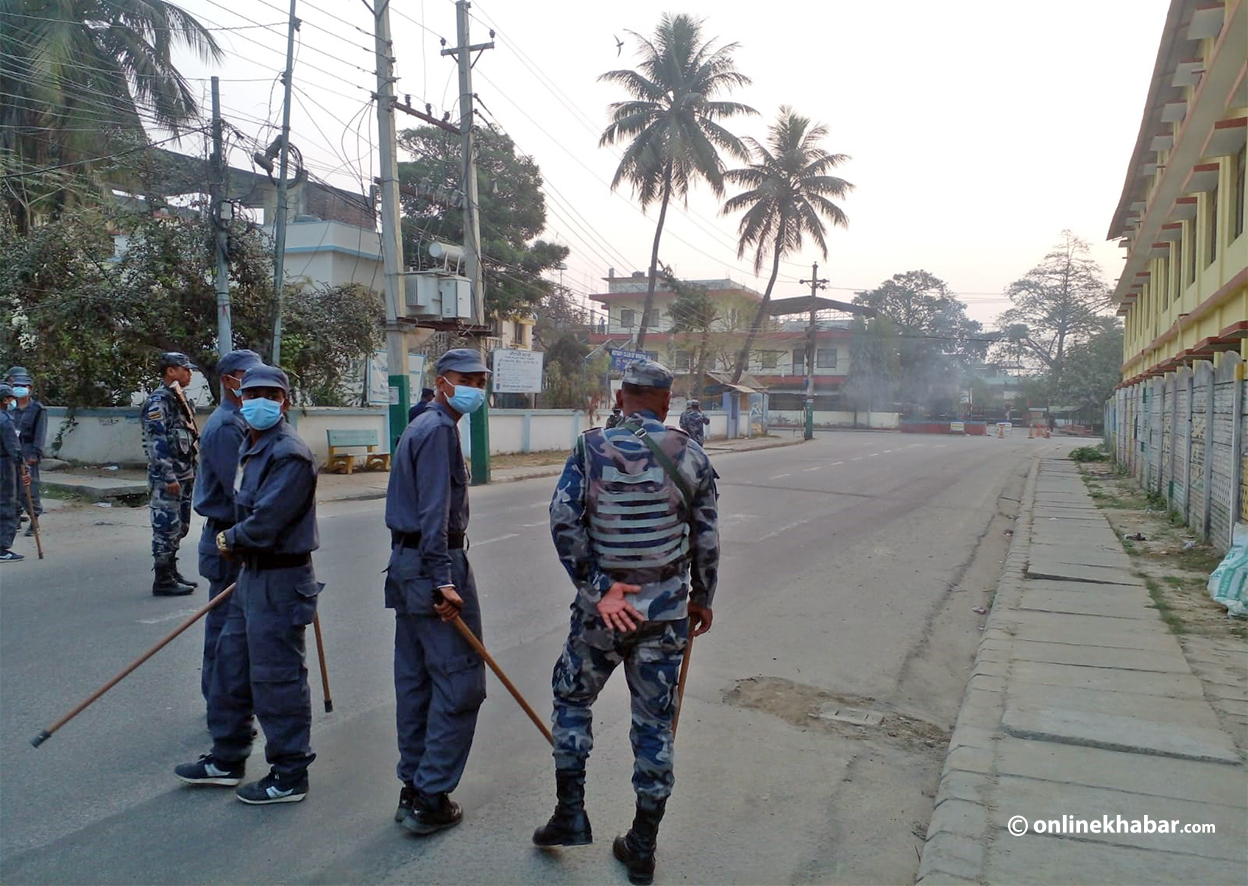
Fearing it could be a bomb, police immediately sealed off the area. A team of temporary police personnel was also deployed. Roads around Danphe Chowk were cleared, public movement was halted, and security was tightened.

Suspecting an explosive device, police informed the Nepal Army. A team was called in from the Suryadal Battalion. Throughout the night, police and army personnel took turns monitoring the site.

Nearby residents watched from their windows, trying to understand the situation. Rumours that a “bomb had been found” had already begun circulating on social media.

At around 7 am on Tuesday, the army team carefully began the process of neutralising the object. Amid a heavy security presence and tense anticipation, the bag was opened. Shortly after, it became clear that it was not a bomb.

Inside the bag was a small clay pot that had been used in a religious ritual. The pot contained ashes and other worship materials. After a night of fear, Danphe Chowk gradually returned to normal.

According to Morang Police Chief SP Kabita Katwal, the timing was highly sensitive, and authorities could not afford to take any risks. She said that after CCTV footage showed a person placing the bag at midnight, immediate precautions were taken.

“Given that this happened on the eve of the election, we treated it as a potential threat,” she told Onlinekhabar. “Only after inspection did we feel relieved that it contained religious materials.”

Police have stated that they are searching for the individual who placed the suspicious object in a public place at midnight during the election period.

The post Bomb scare in Biratnagar during election silence period turns out to be ritual pot appeared first on OnlineKhabar English News.

Nepal’s youth-led protests reshape politics ahead of March 5 election

Sangita Shrestha 22 hours ago
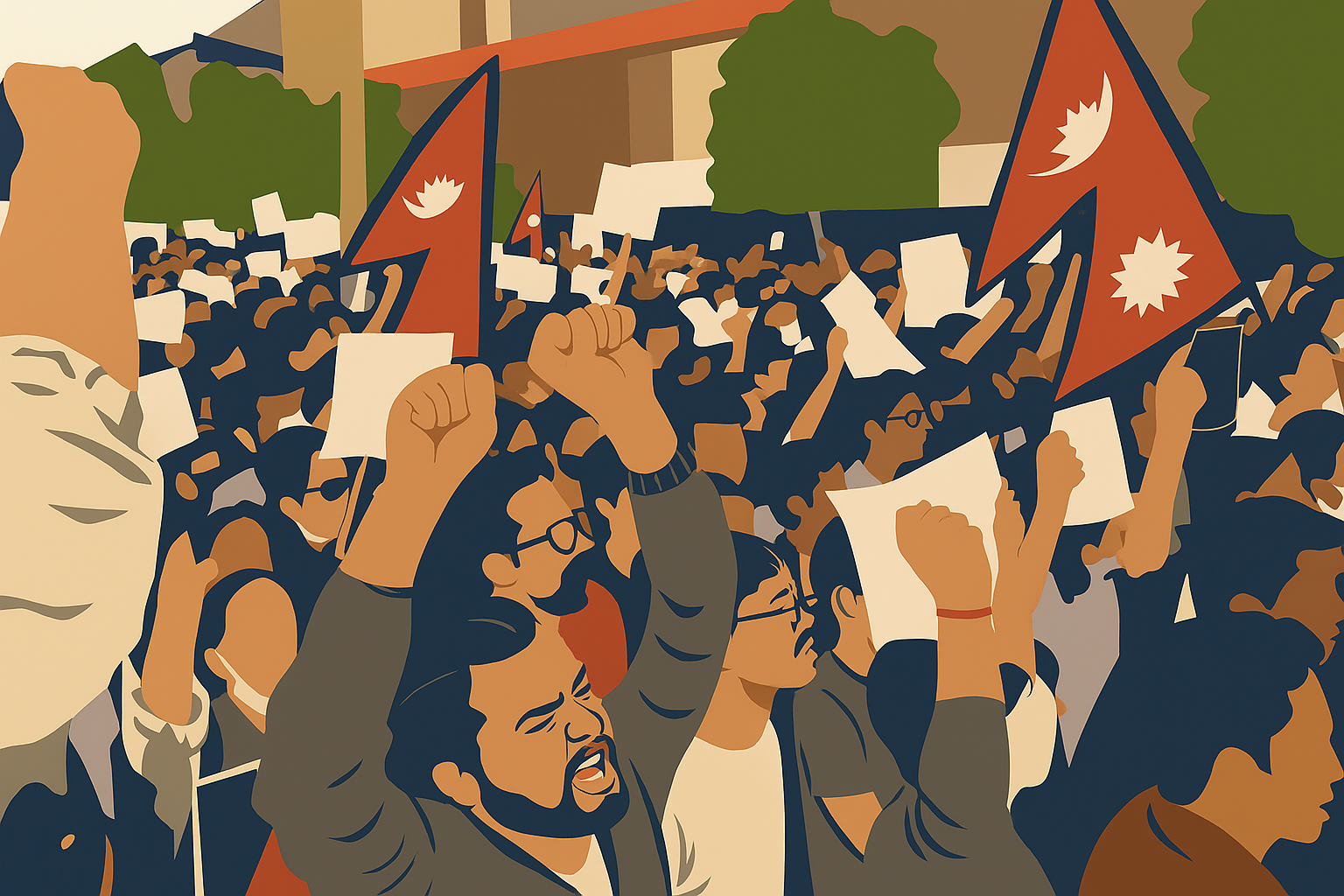
AI generated
AI generated

It has been five months now. The mornings in Kathmandu feel normal again. People no longer smell the gas, but they still remember what happened here. Nepal is ready for the election that will take place on March 5, 2025. This does not feel like just a vote for the people; it is a test to see what they truly want. Young people came together in September 2025.

They were deeply upset and did something about it; they actually brought down the government. This is the reason for having an early election than expected. One thing is sure: people were very angry and wanted to be heard. They made their voices loud and clear. The whole thing started on September 4, 2025, with a government notice that banned social media accounts like TikTok, Facebook, and others.

Officials said they did this for stability. For many Nepalis, it felt like someone had suddenly turned off the lights. For people under thirty, the internet is not just something you use for fun. It’s a classroom, job board, newsroom, and megaphone. Freelancers earn from global clients. Students find materials they can’t get locally.

Activists post evidence that traditional outlets won’t touch. People were really angry and moved fast. By September 8, 2025, the streets of Maitighar and New Baneshwor were packed with people. Something similar happened in other major cities like Pokhara, Biratnagar, Dharan, and Butwal. There were no party flags, no leaders around, and no one stood on a stage telling the crowd what to do.

They held up their phones to show the banners, and the protests grew fast because people shared everything online. They used hashtags that quickly became popular. A young woman wearing a kurta suruwal told a reporter that they had no leaders, only group chats. The people involved did not have a clear plan; they just went out without thinking much about what they would do. The government found it hard to keep everything under control and was very tough on the people, serious about stopping the protests.

They used many tools to control the crowds; the police had shields, sticks, and special guns that shot water and tear gas. Local news showed what was happening. The movement gained wide attention from the community. In the end, the prime minister resigned because of the protests. After negotiations, major parties agreed to form an interim government and hold early elections on March 5.

I remember people walking in the streets during the day and watching the news at night, like they did before during the Nepali Civil War, Jana Andolan I and II, and the Madhes protests. The young were always at the front. The young generation today is different from the one in the past because of the internet and mobile phones. We grew up in the republic declared in 2006.

I remember my parents telling me stories about how brave the people were. The government has not been able to do much for the people because the fighting is often about chairs and power, and governments have not lasted long. The recovery after the 2015 earthquake was not the same for everyone. People are leaving for better opportunities, and those who leave will not be coming back soon. My friends and siblings are going to other countries, not to chase dreams but for work and study.

College graduates without jobs seem to be more than 20 percent. They put in the effort to earn a degree, then find that it is more important to know people than to be good at academics. This shows how frustrated jobless people are. Sometimes it feels like being good at something does not matter when you are looking for work. It is not fair to people who work hard for a degree because, at the end of the day, they still struggle. Life is getting tougher as the cost of living rises.

When you have to spend money on rent, transportation, and helping your family, it seems that jobs are given to those loyal to certain individuals, not to those who are truly capable. People do not talk about politics the way they used to. Politics was once something people discussed over tea, at dinner, or in their free time.

Even people who never cared about politics are now asking questions. Political parties have noticed this change, and their manifestos reflect it. Politics is about the people, so it is good that parties are focusing on them. They talk about support for young entrepreneurs, job training, and internet freedom.

Candidates in their thirties and forties are stepping forward, talking about transparency and merit. Independent candidates are gaining visibility. Senior leaders are trying to keep up by opening social media accounts and following trends. Sometimes it feels awkward; they clearly feel the pressure. The protests were successful and happened almost on their own. No one was in charge, and that made them strong. But this also had downsides; young people now wonder whether voting really makes a difference.

There are more than 1.2 million new voters, most of them from Generation Z. Campaigns are happening everywhere. Candidates want conversations with voters, so they go door to door. They ask for votes online, and the internet is full of appeals. This happens every day. Some young candidates want to channel the energy from the streets. Still, the question remains: will young voters show up for candidates who reflect their demands, or will frustration keep them home?

I was one of those who marched. At that time, I was angry and hopeful at once. I remember it like yesterday; it is still on my mind. We need to keep fighting for our rights. Voting should feel like standing up for what is right, not like giving up. It must feel like we are still saying we want things to be different, that we want change.

If activism and elections become separate things, the power of the youth will fade as fast as it came. I will vote with the mix of hope and anxiety I felt on those streets, feeling the energy and the bravery around me. I am not looking for heroes; I want to see that energy and bravery make a difference. I am looking for people, parties, or independents who understand that legitimacy must be earned, not inherited. The tear gas has cleared. The question has not.

The post Nepal’s youth-led protests reshape politics ahead of March 5 election appeared first on OnlineKhabar English News.
Explore news by Source or Category